Pay-for-Performance Mechanism in the World

The problem

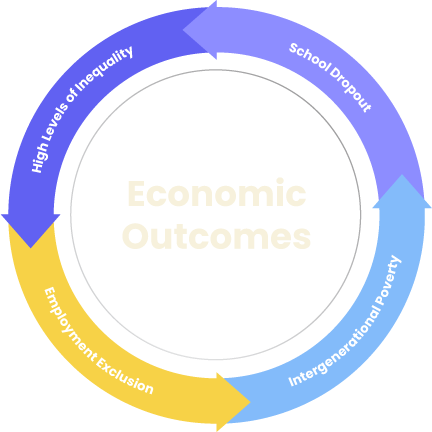
Throughout the last decade, school dropout in secondary education has been one of the main educational challenges in Latin America, and El Salvador is no exception.

INNOVAEDU IMPLEMENTATION

Attention to students.

Participants

1,567

Women

951

Men

616

Minimum Services:

Students
  • Student profiling
  • Development of 21st Century Skills
  • Socioemotional Learning
  • Educational Reinforcement
Teachers
  • Accompaniment to teachers to incorporate social-emotional learning
  • Support for the integration of technological tools
Family members
  • Accompaniment through MINEDUCYT's family education methodology.
  • <lia

The articulation with the Ministry of Education, Science and Technology made it possible to define the schools and identify priority students.

14

Public Educational Centers

We work together to strengthen the skills of 7th, 8th grade and 8th grade students.º and 9th grade, fostering equitable, creative and measurable learning opportunities.

61%

39%

Feasibility Study

Defined the Performance Based Contract (PBC) by identifying the funding model with a combination of milestones and metrics.

Technical Design

Identified the financing scheme, defined minimum services, presented a mapping of potential suppliers and described the implementation of the CBD.

External Verification of Results

An external verifier is in charge of verifying compliance with minimum services and the scope of the results through the defined metrics. 

For INNOVAEDU the metrics defined were:

Suppliers

Two service providers are identified that ensure the personalization of services and work with two different strategies.

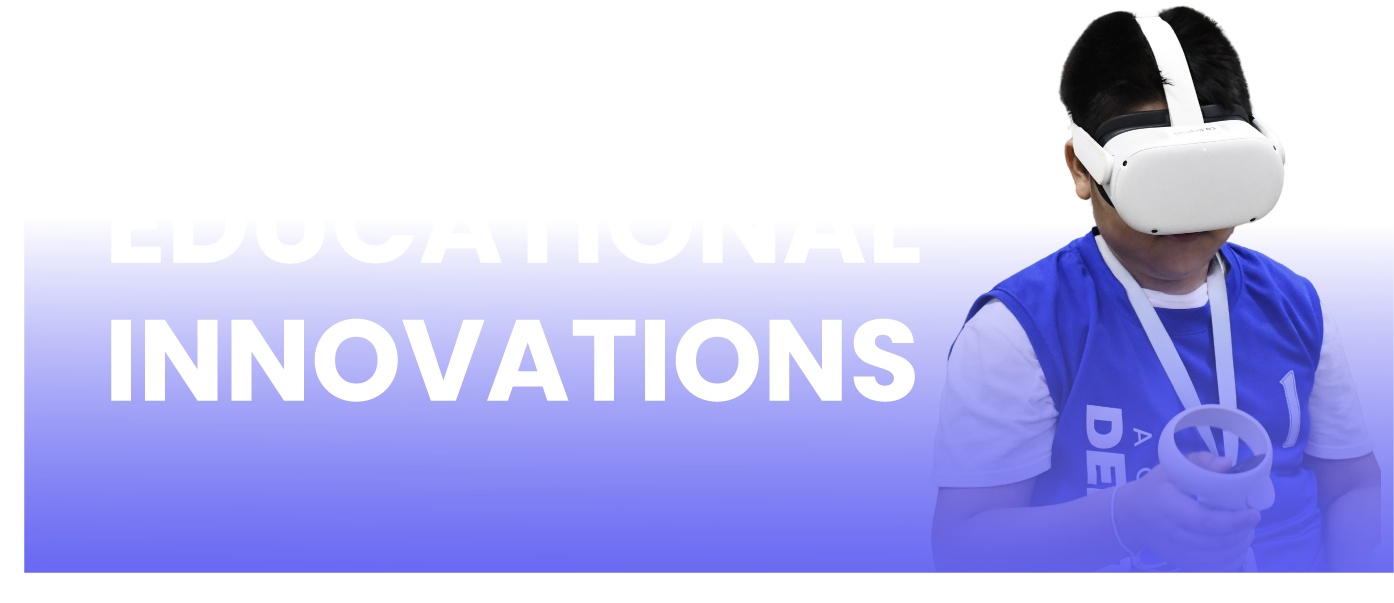
Use of virtual reality for service implementation

364 Students

Use of robotics and programming to implement service.

926 Students

Findings

Gráfico de Barras Horizontales
1,567 students